Admission to MBBS programs in India has become increasingly competitive due to a limited number of government seats and rising NEET cut-off scores each year. Many deserving students are unable to secure admission despite qualifying NEET. For candidates of Indian origin living abroad or those sponsored by Non-Resident Indians, MBBS admission through NRI quota provides a regulated and lawful alternative to pursue medical education in India.
This admission pathway is governed by official counselling authorities and regulated by the National Medical Commission (NMC). Understanding eligibility requirements, fee structures, documentation, and counselling procedures is essential for students and parents considering this option.
Understanding the NRI Quota in MBBS Admissions
The NRI quota is a reserved category of MBBS seats offered in selected government medical colleges, private medical colleges, and deemed universities in India. These seats are intended for Non-Resident Indians (NRIs), Overseas Citizens of India (OCI), Persons of Indian Origin (PIO), and Indian students sponsored by eligible NRI relatives.
Admission under this quota is not informal or discretionary. All seats are allotted strictly through central or state-level counselling processes. NEET qualification is mandatory, and admissions are granted based on merit, seat availability, and document verification.
Eligibility Criteria for MBBS Admission Through NRI Quota
Candidates applying under the NRI category must meet all eligibility conditions prescribed by the regulatory authorities.
NEET Qualification
Qualifying the NEET-UG examination in the relevant admission year is compulsory. Candidates must achieve at least the minimum qualifying percentile specified by the National Testing Agency. Without a valid NEET score, admission under any quota is not permitted.
Academic Requirements
Applicants must have completed Class 12 or an equivalent examination with Physics, Chemistry, Biology, and English from a recognised board. The minimum aggregate marks in PCB subjects must comply with current admission guidelines.
NRI Status or Sponsorship
Candidates must either hold NRI/OCI/PIO status themselves or be sponsored by an eligible NRI relative. Sponsorship rules vary slightly by state, but generally include parents, siblings, uncles, aunts, or legal guardians. Proof of relationship and sponsorship is mandatory.
Age Criteria
The applicant must be at least 17 years old by 31st December of the admission year.
Counselling and Seat Allotment Process
Seat allotment for NRI quota seats is conducted through authorised counselling bodies. The Medical Counselling Committee (MCC) manages counselling for deemed universities and certain institutions, while state counselling authorities handle admissions for state quota and private colleges within their jurisdiction.
Seat allocation depends on:
- NEET rank and merit position
- Availability of NRI quota seats
- Preferences filled during counselling
- Successful verification of all required documents
Higher NEET scores generally improve the chances of securing a preferred college, even under the NRI category.
Documents Required for NRI Quota Admission
Accurate and complete documentation is critical for successful admission. Any discrepancy can result in cancellation of the allotted seat.
Common Documents
- NEET-UG scorecard
- Class 10 and Class 12 mark sheets and certificates
- Birth certificate
- Candidate’s passport
- Recent passport-size photographs
NRI-Specific Documents
- Passport and valid visa of the NRI sponsor
- NRI status certificate issued by the Indian Embassy or Consulate
- Sponsorship affidavit
- Proof of relationship between candidate and sponsor
Candidates are advised to keep multiple attested copies of all documents ready before counselling begins.
NRI Quota MBBS Fees in India
MBBS admission through NRI quota Fee structure is a key consideration for families planning admission under this category. NRI quota fees are significantly higher than government quota fees.
Government Medical Colleges
Some state government medical colleges offer a limited number of NRI quota seats. Although these are government institutions, the fees for NRI seats are considerably higher than regular government seats. Annual fees typically range from ₹20 lakh to ₹25 lakh, depending on state policies.
Private Medical Colleges and Deemed Universities
Private and deemed institutions charge higher tuition fees, often denominated in foreign currency. Annual fees usually range between USD 25,000 and USD 45,000, excluding hostel and miscellaneous charges. The total cost of completing MBBS under this quota can vary widely based on the institution.
Colleges Offering NRI Quota Seats
NRI quota seats are available in:
- Selected state government medical colleges
- NMC-approved private medical colleges
- Deemed medical universities
The number of seats, fee structure, and eligibility rules differ across states. Candidates must review official counselling notifications each year for accurate information.

College Name |
State |
Yearly Fees (INR) |
NRI Fees (Per Year) |
|---|---|---|---|
Narayan Medical College & Hospital, Sasaram |
Bihar |
₹11,15,000 |
$25,000 |
Katihar Medical College, Katihar |
Bihar |
₹11,05,000 |
$28,000 |
Lord Buddha Koshi Medical College & Hospital |
Bihar |
₹12,00,000 |
$30,000 |
Madhubani Medical College & Hospital |
Bihar |
₹14,00,000 |
$25,000 |
Raipur Institute of Medical Science |
Chhattisgarh |
₹35,19,000 |
$30,000 |
Shri Balaji Institute of Medical Science |
Chhattisgarh |
₹13,20,000 |
$35,000 |
Shri Rawatpura Sarkar Institute of Medical Sciences & Research |
Chhattisgarh |
₹13,30,187 |
$15,000 |
Abhishek Mishra Memorial Medical College & Research |
Chhattisgarh |
₹13,32,887 |
$35,000 |
People’s College of Medical Sciences & Research Centre |
Madhya Pradesh |
₹17,61,000 |
$30,000 |
LN Medical College & Research Centre, Bhopal |
Madhya Pradesh |
₹16,58,000 |
$38,000 |
Sri Aurobindo Institute of Medical Sciences, Indore |
Madhya Pradesh |
₹17,40,000 |
$40,000 |
Chirayu Medical College & Hospital, Bhopal |
Madhya Pradesh |
₹16,98,000 |
$32,000 |
Symbiosis Medical College for Women, Pune |
Maharashtra |
₹10,00,000 |
$41,300 |
MGM Medical College, Aurangabad |
Maharashtra |
₹23,50,000 |
$60,000 |
MGM Medical College, Navi Mumbai |
Maharashtra |
₹23,50,000 |
$60,000 |
MGM Medical College, Vashi |
Maharashtra |
₹23,50,000 |
$60,000 |
MGM Medical College, Nerul |
Maharashtra |
₹23,50,000 |
$60,000 |
Dr DY Patil Medical College, Pune |
Maharashtra |
₹27,00,000 |
$50,000 |
Dr DY Patil Medical College, Navi Mumbai |
Maharashtra |
₹27,00,000 |
$50,000 |
Dr DY Patil Medical College, Kolhapur |
Maharashtra |
₹24,00,000 |
$35,000 |
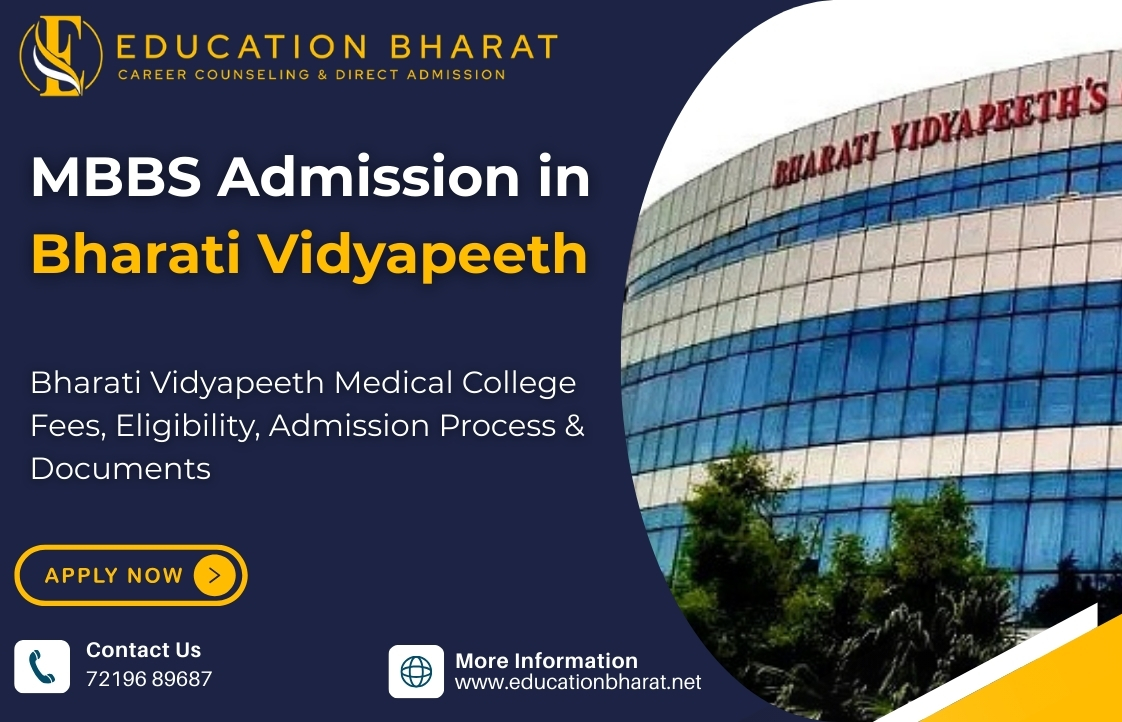
Bharati Vidyapeeth Medical College, Pune |
Maharashtra |
₹25,96,000 |
$40,000 |
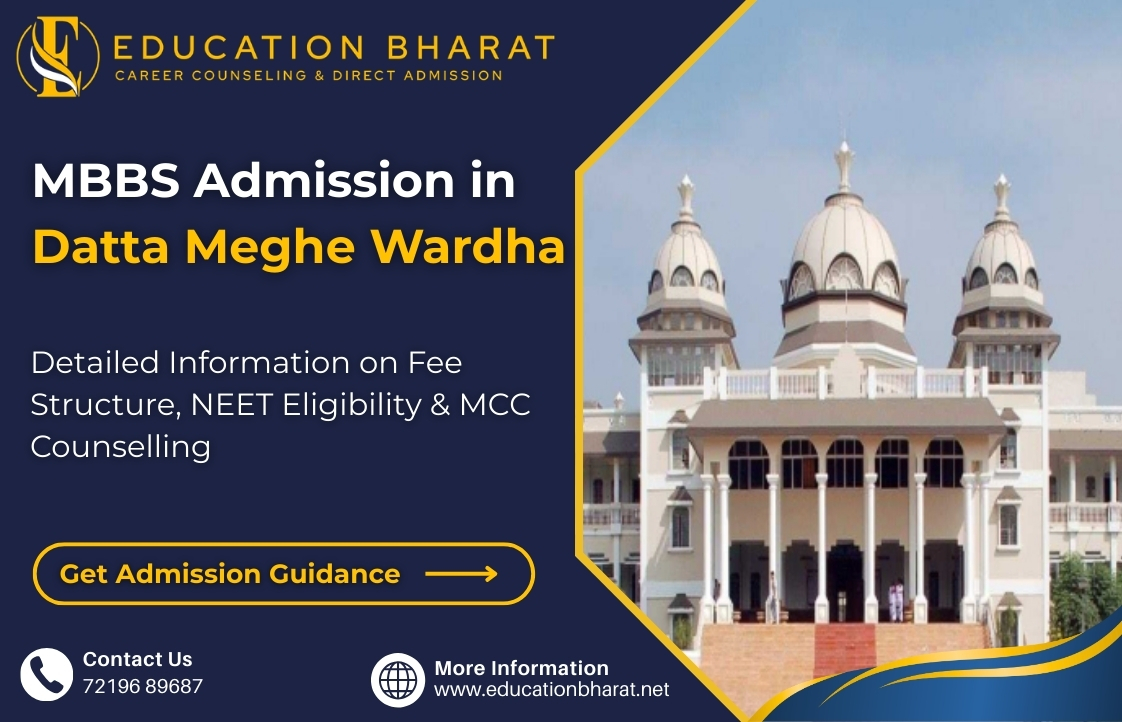
Jawaharlal Nehru Medical College (Datta Meghe), Wardha |
Maharashtra |
₹22,00,000 |
$32,500 |
Kasturba Medical College, Manipal |
Karnataka |
₹17,80,000 |
$49,400 |
Kasturba Medical College, Mangalore |
Karnataka |
₹17,80,000 |
$37,100 |
JSS Medical College, Mysore |
Karnataka |
₹21,95,100 |
$46,000 |
JGMM Medical College, Hubballi |
Karnataka |
₹17,36,000 |
$30,000 |
KS Hegde Medical College, Mangalore |
Karnataka |
₹17,78,000 |
$32,812 |
Yenepoya Medical College, Mangalore |
Karnataka |
₹23,00,000 |
$32,812 |
Jawaharlal Nehru Medical College (JNMC), Belagavi |
Karnataka |
₹19,15,000 |
$45,500 |
Benefits of MBBS Admission Through NRI Quota
This admission route offers several advantages for eligible candidates:
- Reduced competition compared to general merit seats
- Opportunity for overseas Indian students to study medicine in India
- Admission to recognised institutions with approved academic infrastructure
- Transparent counselling-based allotment process
For many families, this option provides a practical pathway when government quota admission is not achievable.
Challenges and Key Considerations
Despite its benefits, applicants should be aware of certain challenges:
- Higher tuition fees and overall education costs
- Strict documentation and sponsorship verification
- Limited availability of seats in government colleges
- State-specific regulations that may change annually
Early preparation and accurate guidance are essential to avoid procedural issues.
Step-by-Step Application Process
- Register for and qualify NEET-UG
- Confirm eligibility under the MBBS admission through NRI quota
- Collect and verify all required documents
- Register for MCC or state counselling
- Participate in choice filling and seat allotment rounds
- Complete fee payment and report to the allotted institution
Admissions outside the counselling framework are not permitted.
Why Choose Education Bharat for Direct Admission Through NRI Quota?
MBBS admission through NRI quota requires clarity, regulatory understanding, and accurate interpretation of counselling procedures. Education Bharat provides structured and ethical admission guidance based strictly on official counselling frameworks and National Medical Commission regulations.
With experience across multiple state and central counselling authorities, Education Bharat supports students and parents in making informed decisions without shortcuts or unofficial practices.
How Education Bharat Supports Students
Education Bharat assists students with:
- Identifying the correct admission category (NRI quota or management quota)
- College shortlisting based on NEET score, eligibility, and budget
- Counselling registration and choice filling
- Verification of NRI sponsorship and related documentation
- Admission confirmation and reporting guidance
All support is aligned with official counselling notifications and verified institutional data, ensuring transparency and compliance at every stage.
Chat on WhatsApp
Frequently Asked Questions (FAQs)
- What is MBBS admission through NRI quota?
MBBS admission through NRI quota is a reserved admission category for Non-Resident Indians, OCI/PIO candidates, or students sponsored by eligible NRI relatives, offered through official counselling authorities. - Is NEET compulsory for admission under NRI quota?
Yes, qualifying NEET-UG is mandatory for all MBBS admissions in India, including seats under the NRI quota. - Can Indian citizens apply for NRI quota seats?
Indian citizens can apply only if they are sponsored by an eligible NRI relative and meet all documentation requirements specified by the counselling authority. - Do government medical colleges offer NRI quota seats?
Some state government medical colleges offer a limited number of NRI quota seats with a higher fee structure compared to regular government quota seats. - What is the fee structure for MBBS under NRI quota?
NRI quota fees vary by institution and can range from ₹20–25 lakh per year in government colleges and USD 25,000–45,000 per year in private or deemed universities. - Is the MBBS degree obtained through NRI quota valid in India?
Yes, MBBS degrees obtained through NRI quota admissions are fully recognised by the National Medical Commission. - Is NRI sponsorship mandatory for all applicants?
Sponsorship is mandatory unless the candidate holds valid NRI, OCI, or PIO status themselves. - How are seats allotted under the NRI quota?
Seats are allotted through central or state counselling based on NEET rank, seat availability, choice filling, and successful document verification. - Can NRI quota candidates participate in multiple counselling rounds?
Yes, candidates are allowed to participate in multiple counselling rounds as per the rules of the counselling authority. - When should students start preparing for NRI quota admission?
Students should begin preparation before NEET results, especially for documentation, eligibility assessment, and counselling registration.